


€7 Million THRIVE Funding Secured for Drogheda’s West Gate House
Louth County Council has welcomed the allocation of €7 million in Town Centre First Heritage Revival Scheme (THRIVE) Strand 2 funding for the regeneration of West Gate House and the former Drogheda Youth Development building on West Street.
Co-funded by the Government of Ireland and the European Union through the ERDF Southern, Eastern & Midland Regional Programme 2021-27, THRIVE aims to allow local authorities and citizens to reimagine and revitalise town centres through the renovation and reuse of publicly owned vacant or derelict heritage buildings. Drogheda is one of 14 town centres across the country set to benefit from the latest round of funding.
Following Louth County Council’s successful bid for €200,000 in Strand 1 funding in 2024, Shaffrey Architects were appointed to develop an Integrated Urban Strategy. This work, carried out in late 2024 and early 2025, involved extensive public and private consultations, including workshops with community groups, artists, educators, local businesses, and heritage bodies. As a result, West Gate House and the adjoining former Drogheda Youth Development building were selected as the preferred site for regeneration.
With the support of elected representatives in the Drogheda Borough District, Part 8 Planning was approved in May - a key milestone in the application process for THRIVE capital funding. The total investment in the project is estimated at approximately €10 million, with the balance to be provided by Louth County Council.
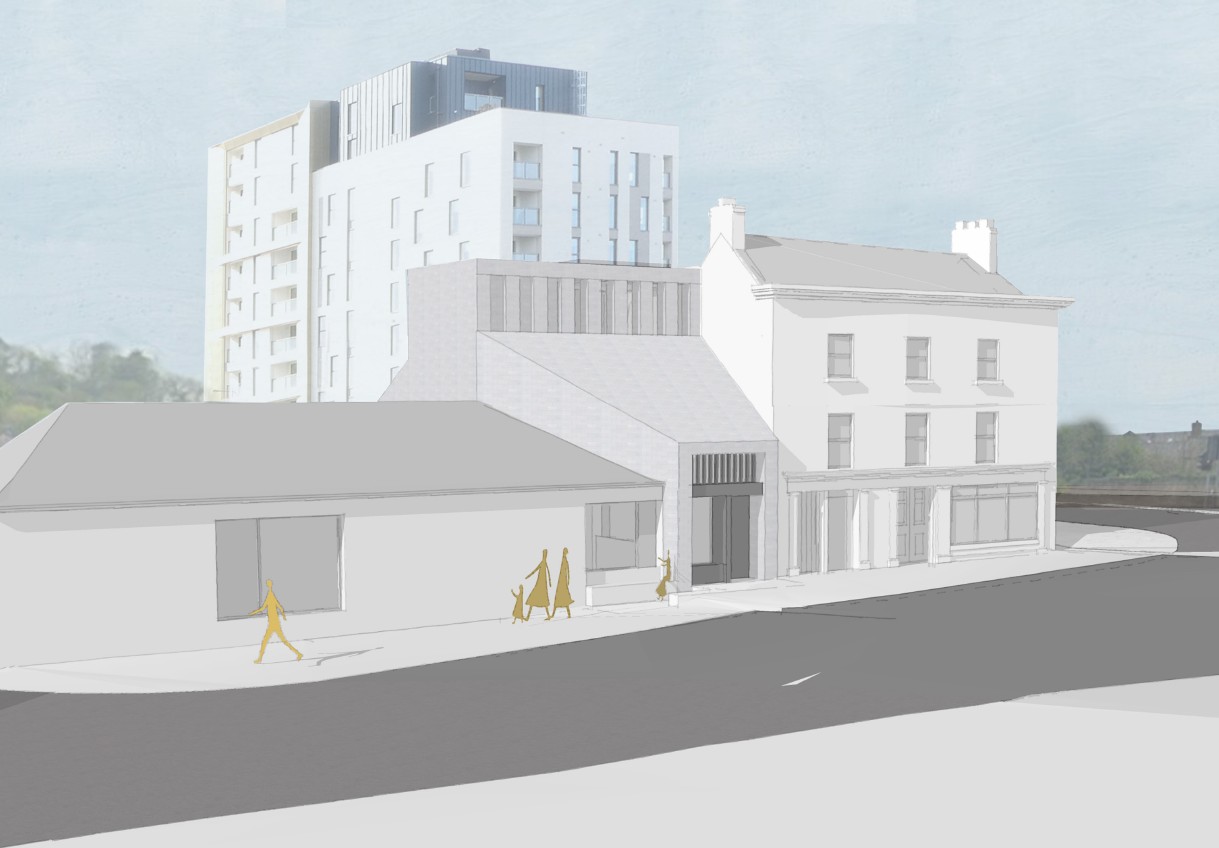
The regeneration of West Gate House offers a unique opportunity to address vacancy and dereliction while preserving Drogheda’s built heritage. The proposed development includes a multi-functional cultural and community hub, featuring exhibition and performance spaces, artist studios, digital media facilities, and meeting rooms.
Refurbishment will follow climate-conscious design principles, with universal access integrated throughout. The building will be refurbished using climate-conscious design principles, with universal access integrated throughout. The end-use is intended to be sustainable in the long term, with operational viability supported through a mix of public programming, strategic partnerships, and potential income-generating activities.
By aligning with THRIVE objectives, the project exemplifies the transformative potential of heritage-led regeneration, enhancing tourism, supporting local enterprise, and reinforcing Drogheda’s role as a thriving urban centre.
The project was identified as a priority within the Drogheda Urban Regeneration Strategy and aligns with the Louth County Development Plan, as well as national frameworks, such as Project Ireland 2040 and the National Planning Framework.
Cllr Seán Kelly, Cathaoirleach of Louth County Council, said: “This THRIVE funding for West Gate House marks a turning point for Drogheda. It will take a vacant and derelict heritage building in the heart of the town and convert it into a creative and community asset, protecting it and providing an artistic space for use by future generations.”
Cllr Michelle Hall, Mayor of the Borough District of Drogheda, also welcomed the announcement, saying: “I would like to congratulate the team in the Major Capital Projects and Infrastructure Delivery section at Louth County Council for their successful application and various local councillors, like Cllr Pio Smith, who have championed this project for many years. West Gate House is just one example of how our town is moving forward with purpose, and after many years of stagnation, it is great to see Drogheda being reinvigorated with new developments.”
David Conway, Chief Executive of Louth County Council, said: “West Gate Vision reflects Louth County Council’s long-term commitment to Drogheda’s regeneration. With over €57 million in projects such as West Gate House, West Gate Vision, the new library at St Dominic’s Church and the recently refurbished Drogheda Civic Office, either completed, underway, or in planning, it shows that Drogheda is entering a new chapter of growth and renewal.”